
Pragmatic use of AI to Facilitate Efficiency Improvement
The power of Generative AI has been very well documented. Its ability to unlock vast data resources and deliver tangible value is widely acknowledged.
The challenge is to evolve beyond incremental and piecemeal use of generic tools such as ChatGPT towards AI embedded within core operational systems and processes. With pressure on the power industry to rapidly accelerate production to meet the extraordinary escalation in demand companies need to rapidly assess how and where AI can be safely used to improve productivity whilst retaining critical regulatory compliance.
Achieving Safe Expansion
The planned growth in nuclear capacity is key to decarbonisation and energy security goals. With an endemic shortage of skilled nuclear engineers, however, a step-change in productivity is essential to accelerate innovation and build the new infrastructure required – but power companies must also embed compliance and quality to minimise risk.
AI will play an important role in accelerating innovation and adding capacity across the energy sector by unlocking the immense value stored within the industries’ data.
There are also opportunities to transform regulatory compliance, maintenance practices, and support workforce development. AI can enable the sector to make incremental gains in efficiency, delivering quantifiable improvements in productivity all the while keeping compliance of paramount importance.
Maximising Knowledge
Power companies have an extraordinary amount of information, with diverse data resources spanning hundreds, even thousands of projects.
AI has the power to unlock the value of that data by extracting information in a way that can be used by functions across an organisation. Transforming accessibility with natural language AI models allows individuals to interact with an agent that interrogates the vast data to provide clear answers quickly.
Focusing on meaning rather than keywords, natural language search facilitates access to information without requiring complex or industry-specific terminology. It can provide precise answers and highlight relevant sections of documents.
These models also support role-specific language, both in the questions asked and the results provided. From the complexity required by engineers reviewing a new design concept to the legal team crafting contracts or the procurement team managing a complex supply chain. The entire organisation can gain value from cross-departmental insight and also collaborate in a way that supports the functional goals and information needs.
Workforce Transition
The use of natural language models also supports different generational experiences and expectations throughout the workforce.
For an industry facing the challenges of retirement and skill shortages, the need to entice younger people, the use of natural language models introduces new opportunities for training, education and engagement.
Based on available data and the previous behaviours of skilled staff, training courses can be seamlessly designed in a more relaxed language to help develop the younger demographic.
Workers can query User Guides and quickly access relevant summaries using their preferred terminology but also in multiple languages, enhancing engagement across a global workforce.
The speed and ease with which natural language models help individuals to locate pertinent information also improves employee onboarding and minimises the potential disruption associated with older colleagues being constantly asked simple questions. From immediate and up to date health and safety information, such as which PPE is required in a specific location, to simple contractual searches to understand specific supplier relationships, AI can build confidence as well as productivity for new recruits across the business.
Building Robust Data Resources
The power and value of AI is, of course, directly linked the quality and accuracy of data resources. Over the years, the use of manual metadata entry, which is both time-consuming and error-prone, has undermined the quality of data for many power companies. The result is not only time wasted by individuals searching for the correct information but also a lack of data confidence. At best, this can lead to colleagues spending more time conferring to check accuracy; at worst, it can cause a compliance breach.
Integrating AI capabilities into enterprise information management systems can greatly reduce the time needed to improve the quality of data resources by quickly identifying inaccurate data. The AI can analyse the content of documents and highlight possible inconsistencies in versions, decreasing the amount of manual work involved in checking accuracy. Although it is still necessary to manually reclassify and verify the metadata and tags match, data improvement projects should never have to be carried out again. After AI has been successfully embedded within core processes – automated validation and verification ensure that the data is properly tagged, classified and stored.
AI will enable staff to concentrate on skilled tasks and safely help achieve productivity improvements that are necessary if the industry is to meet its ambitious expansion targets.
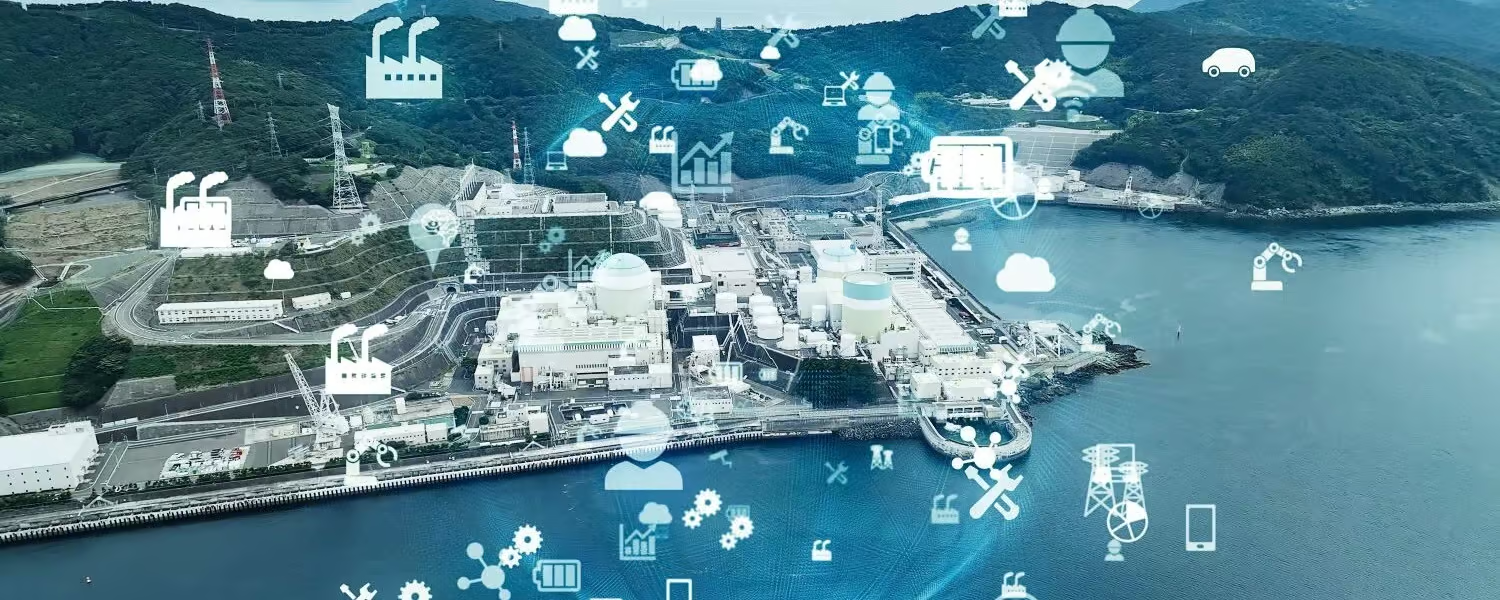

By empowering staff to focus on skilled tasks, AI will safely support the improvements in productivity that are essential if the industry is to meet the ambitious expansion goals.
Enhancing Compliance
Introducing an AI-enabled data upload process can improve the accuracy and speed of adding files into your projects. For example, new regulations can demand information updates across potentially hundreds of relevant documents. AI can read the regulatory changes and quickly surface all the appropriate documents affected. Once you have this view of impact, it can help set priorities and timelines for updates, ensuring staff maximise their productive time.
In addition to the speed every department can access relevant procedures, an embedded validation and verification process also helps transform confidence in the information. From health and safety to environmental standards and critical infrastructure protection, transforming speed of access is key to reinforcing adherence, improving oversight and streamlining regulatory reporting.
Human in the Loop
AI is not, however, a panacea. It cannot be left to run unmanaged and unchecked.
At every stage of the process, it is essential to include human oversight. By ensuring answers are verified and sources validated by professionals, especially in the context of critical engineering and compliance, power companies can achieve tangible gains in quality and productivity without incurring operational risks.
While enormously powerful, AI is not a replacement but a facilitator; a chance to maximising existing skilled resources and accelerate knowledge sharing. It is a tool that, used effectively, can reduce manual tasks, fast track access to information and, critically, ensure that information is up to date and valid. By empowering staff to focus on skilled tasks, AI will safely support the improvements in productivity that are essential if the industry is to meet the ambitious expansion goals.

By André Gunter,
Head of Technical Solutions at Idox